
How to Restore Your Driveway Color in South Carolina
A gray driveway that has gone green, black, rusty or just dull is usually not worn out. Most of the color loss on South Carolina concrete sits on the surface, and most of it comes off. Here is what causes it, what cleaning brings back, and when it is time to call a concrete contractor instead.
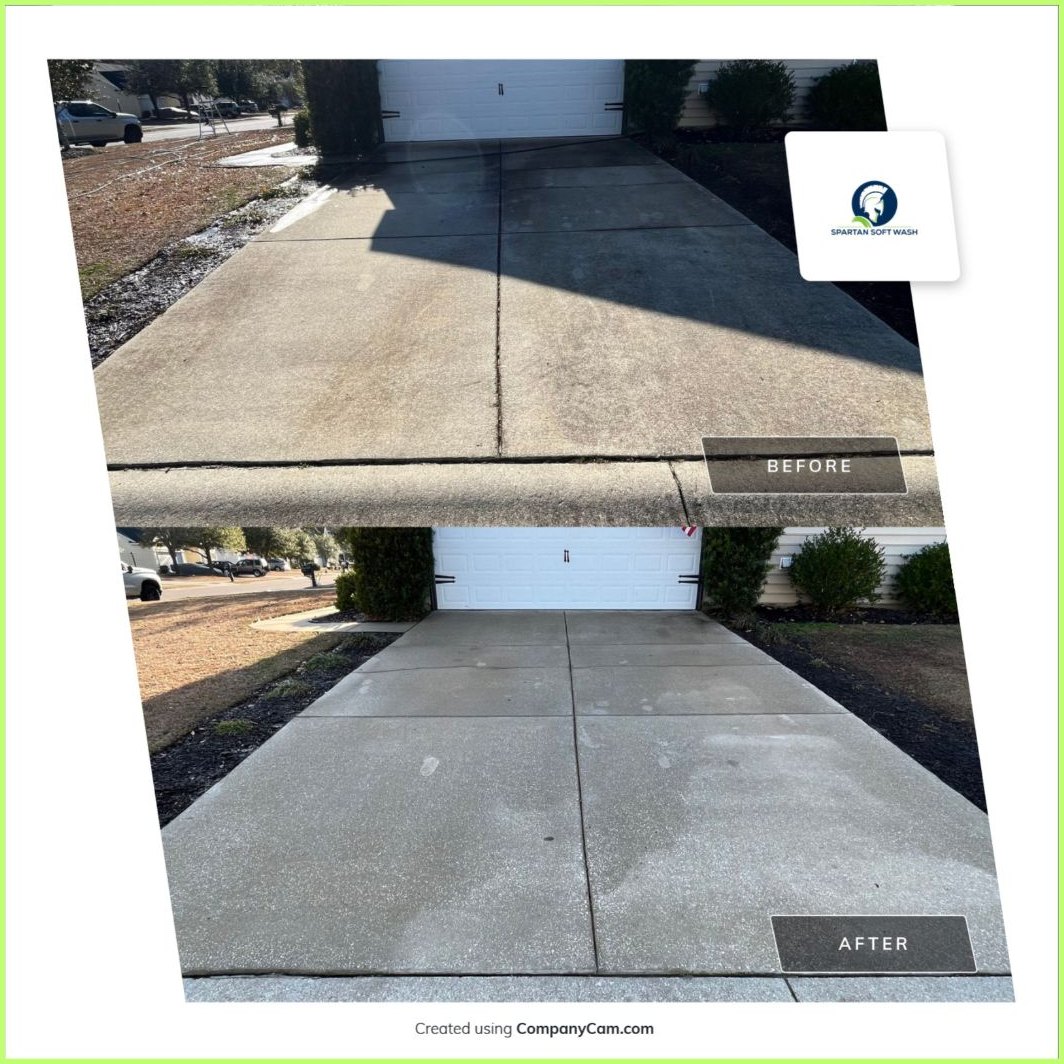
Look at the strip of driveway under your car, or the slab inside the garage. That is the color your whole driveway was when it was poured. Everything between that patch and the gray-green surface at the street is something that landed on the concrete and stayed: algae, mildew, pollen, tire rubber, rust and road grime. South Carolina's climate piles it on faster than almost anywhere else, and the good news is that almost all of it is removable.
Why Concrete Loses Its Color in South Carolina
Concrete is porous. It drinks water, holds it, and in our humidity it never fully dries in the shade. That one fact explains most of the list below.
Algae and mildew
The green film that spreads from the shaded edges, and the black speckling that follows it, are living growth. Spores land on every outdoor surface; they take hold where the concrete stays damp, which means under live oaks, along the north side of the house, next to irrigated beds and anywhere a downspout empties. Summer humidity above 70 percent for months at a time means a shaded driveway in Mount Pleasant or Summerville can go from clean to green in a single season. Algae is also slippery when wet, which makes it the one stain on this list that is a safety problem as well as a cosmetic one.
Oxidation and grime
Concrete cures with a thin layer of cement paste on top. Years of sun, rain and foot traffic slowly oxidize and wear that paste, and the roughened surface traps pollen, dust, exhaust soot and the brown tannin that leaches out of fallen oak leaves. The result is a dull, dingy gray that does not look like a stain because it covers everything evenly. It is the most common reason a driveway looks old.
Rust stains
Orange and brown streaks come from iron. On Johns Island, Wadmalaw and the rural edges of Summerville, well water carries dissolved iron that sprinklers spray across the driveway every morning. Everywhere else, iron-rich lawn fertilizer scattered onto the concrete and left to get wet does the same thing in spots. Metal furniture, bikes, beach carts and a leaking car battery add their own marks. Rust bonds to the concrete chemically, which is why pressure alone will not move it and why the wrong product makes it worse.
UV fading and sealer breakdown
Plain gray concrete does not fade in the sun in any meaningful way; it gets dirty. Colored concrete does fade. Stamped driveways, integrally colored pours and acid-stained slabs depend on a sealer to hold their color, and in Lowcountry sun that sealer breaks down in three to five years. When it goes cloudy, white or peels, the pigment underneath weathers and the color goes flat. That is a different problem from the ones above, and it needs a different fix.
Oil, tire marks and efflorescence
Three smaller ones: the dark rectangles where cars sit are tire rubber and oil drips; the white, chalky bloom on newer concrete is efflorescence, salts carried to the surface by water moving through the slab; and on driveways near the water, salt film from the air and from king-tide flooding leaves a gray crust that holds moisture and feeds more algae.
What Professional Cleaning Can Restore
The table below is how we triage a driveway on the walk-around. Most of the first column is routine; the last two rows are not cleaning jobs at all.
| What you see | What it is | Cleaning result | How it is fixed |
|---|---|---|---|
| Green or black film, worst in shade | Algae and mildew | Cleaning restores it fully | Pre-treatment, surface cleaner, algaecide post-treatment |
| Dull, dingy gray all over | Grime, pollen and oxidized surface paste | Cleaning restores most or all of it | Surface cleaner at even pressure |
| Orange or brown streaks and spots | Rust from irrigation, fertilizer or metal | Usually restored with a rust treatment | Chelating rust remover, then rinse |
| Dark patches where cars park | Oil and tire rubber | Mostly restored; old oil can shadow | Degreaser pre-treatment, surface cleaner |
| White, chalky haze | Efflorescence (salts wicking out) | Cleaning removes it; it can return | Low-pressure wash, specialty cleaner if heavy |
| Faded color on stamped or stained concrete | Sealer breakdown and UV | Cleaning reveals what is left; color needs resealing or re-staining | Gentle clean, then a sealer or stain contractor |
| Flaking, pitting, exposed stones | Spalling and surface failure | Cannot be cleaned back; needs resurfacing | Overlay or replacement |
| Cracks, sunken slabs, trip edges | Settlement and tree roots | Not a cleaning problem | Mudjacking, slab replacement |
The short version: if the problem is on the concrete, cleaning restores the color. If the problem is in the concrete, with flaking, pitting, cracks or lost pigment, cleaning will make it look tidier but you need a concrete or sealing contractor to make it look new.
How a Driveway Is Cleaned the Right Way
Anyone can rent a pressure washer, and the stripes on half the driveways in the Lowcountry show how that goes. A wand held too close cuts lines into the paste, and the lines are permanent. The professional method is slower on paper and faster in practice:
- Pre-treatment. A cleaning solution goes on first to break down the algae, mildew and grime, so the water does the lifting instead of brute force. Oil spots get a degreaser; rust spots get a rust treatment (more on that below).
- Surface cleaner, not a wand. A rotary surface cleaner is a hooded disc with spinning nozzles held at a fixed height. It delivers the same pressure to every square inch, which is what gives you an even, stripe-free finish from the garage to the street.
- Edges and rinse. Edges, expansion joints and the gutter line are finished by hand and everything is rinsed toward the street, not the garage or the beds.
- Post-treatment. An algaecide applied after cleaning keeps working for weeks and delays the green from coming back, which is the difference between a driveway that stays bright for a year and one that looks tired by spring.
This is how Spartan Soft Wash cleans driveways across Charleston, Mount Pleasant, Summerville and the islands. The goal on every job is the original concrete color, and the method is chosen so the concrete is cleaned rather than cut.
Rust: The Stain Most People Get Wrong
The internet's answer to rust on concrete is muriatic acid. It works, in the sense that the orange disappears, and it also etches the top of the slab, leaving a lighter, rougher patch that is as noticeable as the stain was and that grabs dirt faster from then on. Bleach does nothing to rust at all.
Rust needs a chelating cleaner: a product that bonds to the iron and pulls it out of the concrete's pores without attacking the cement. Applied, allowed to work, and rinsed, it lifts irrigation stripes, fertilizer spots and most battery and metal marks in one treatment, with no etching. We treat rust during the driveway cleaning, and the same approach works on stucco and vinyl where sprinklers hit the house. More about rust removal.
When Cleaning Is Not Enough
- Spalling and flaking. If the surface is popping off in flakes or the aggregate stones are showing, the paste layer has failed, usually from freeze damage, de-icing salt or a weak original pour. Cleaning cannot put it back. A concrete overlay or a new pour is the fix.
- Faded stamped or stained concrete. Cleaning strips the grime and the failed sealer residue and shows you what color remains. Restoring the color means a fresh sealer, often with a tint, or a re-stain. Clean first; sealing over dirt locks it in.
- Cracks and settlement. A clean driveway makes cracks more visible, not less. Hairline cracks are cosmetic; cracks with a height difference or a sunken slab need mudjacking or replacement.
- Deep oil shadows. Oil that has soaked into the concrete for years can leave a faint shadow after degreasing. It is lighter every time it is cleaned, but the first cleaning may not take it all.
We will tell you which of these you have on the walk-around, before the work starts, and photograph it. A good cleaning company should be the one to say when the job is not a cleaning job.
Keeping the Color Once It Is Back
- Trim branches that shade the driveway and keep sprinkler heads from spraying it. Dry concrete does not grow algae.
- Rinse fertilizer off the concrete the day you spread it, before it rains.
- Put a drip mat under any car that marks its spot.
- Clean it about once a year, sooner in heavy shade, and book it with the house wash so the whole front of the house ages at the same rate.
- Consider a penetrating sealer on plain concrete after cleaning; it slows water absorption and makes the next cleaning easier.
What It Costs
Spartan Soft Wash charges $100 for a one-car driveway, $150 for two cars and $200 for three or more, with oil treatment $50 more and rust removal quoted with the job. Those are the same numbers our instant quote tool uses, so you can price your driveway from your address in about a minute and book a day without a sales visit. Before and after photos arrive the same day. See the full price guide for every service.
Driveway color FAQs
Can a dirty driveway really come back to its original color?
Most plain gray concrete driveways in South Carolina can. What looks like permanent discoloration is usually algae, mildew, pollen, tire rubber and rust sitting on the surface, and all of that comes off with the right treatment and a surface cleaner. Color that was added to the concrete, on stamped or stained driveways, is the exception; cleaning shows what is left, and a sealer or stain brings the rest back.
Why does my driveway turn green so fast?
Shade and moisture. Concrete is porous, and in our humidity it stays damp under trees and on the north side of the house. Algae spores land everywhere and grow wherever the surface never fully dries. A post-treatment after cleaning slows it down, and keeping the driveway in sun and trimmed clear of overhanging branches helps the most.
Will pressure washing damage my concrete?
It can if it is done with a wand at full pressure held close to the surface, which cuts stripes and etches the paste off the top of the slab. A rotary surface cleaner spreads the pressure evenly and keeps the nozzles at a fixed height, so the concrete is cleaned, not carved.
How do you get rust stains off a driveway?
Not with pressure, which does nothing to rust, and not with muriatic acid, which etches the concrete and leaves a lighter patch. We use a chelating rust remover that bonds to the iron and lifts it out of the pores, then rinse. Most irrigation and fertilizer rust comes out in one treatment.
How much does driveway cleaning cost in South Carolina?
Spartan Soft Wash charges $100 for a one-car driveway, $150 for two cars and $200 for three or more, with oil treatment $50 more and rust removal quoted with the job. The instant quote tool prices it from your address.
How often should a South Carolina driveway be cleaned?
About once a year keeps most driveways bright. Shaded driveways and homes near the marsh or under live oaks often need it closer to every nine months. Booking it with a house wash saves a trip and keeps the whole front of the house looking the same age.
See what your driveway costs to bring back.
Enter your address and a few details about the home, see your quote instantly, and book a day on the spot. No sales visit, no waiting on a callback.